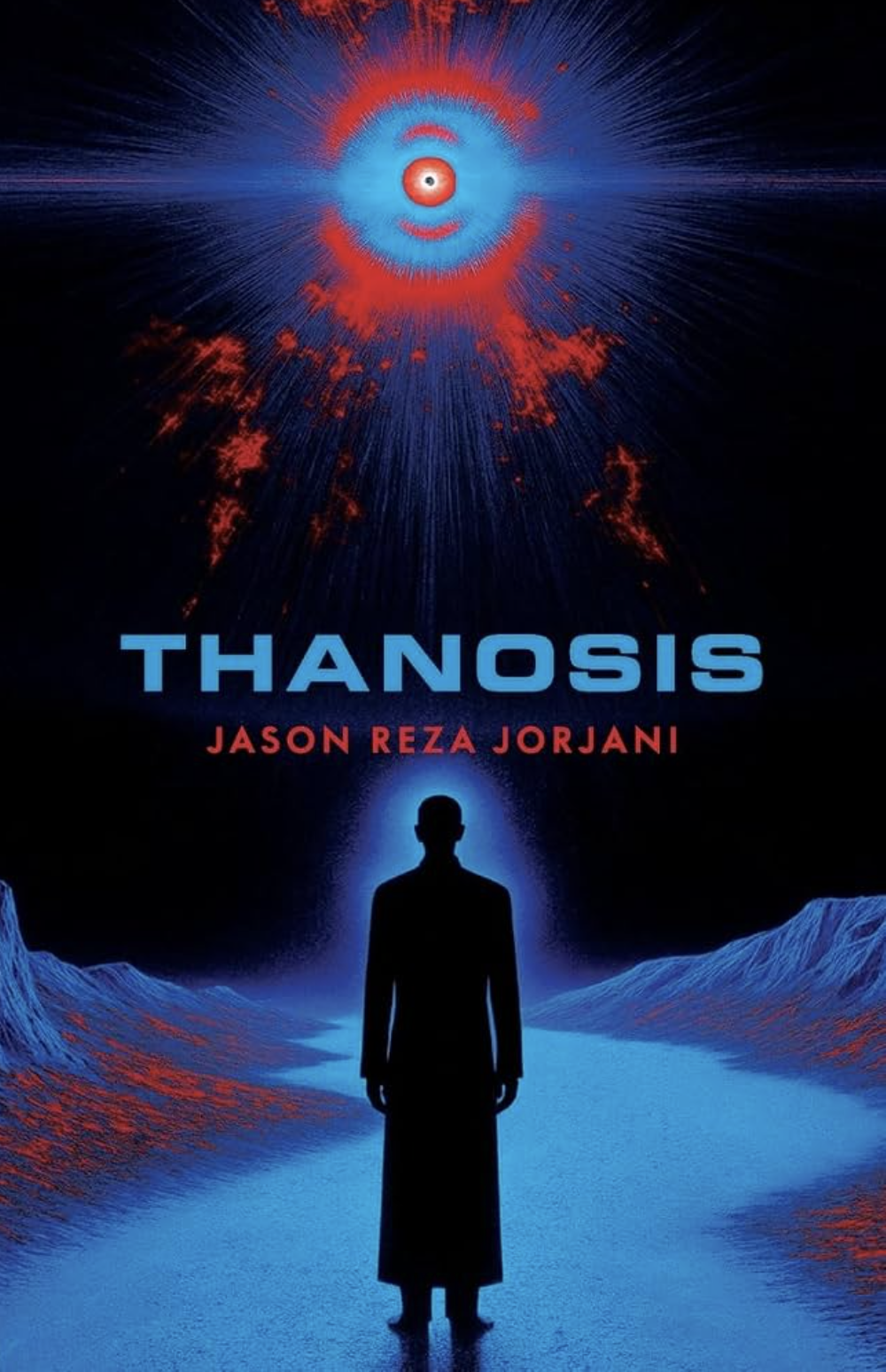
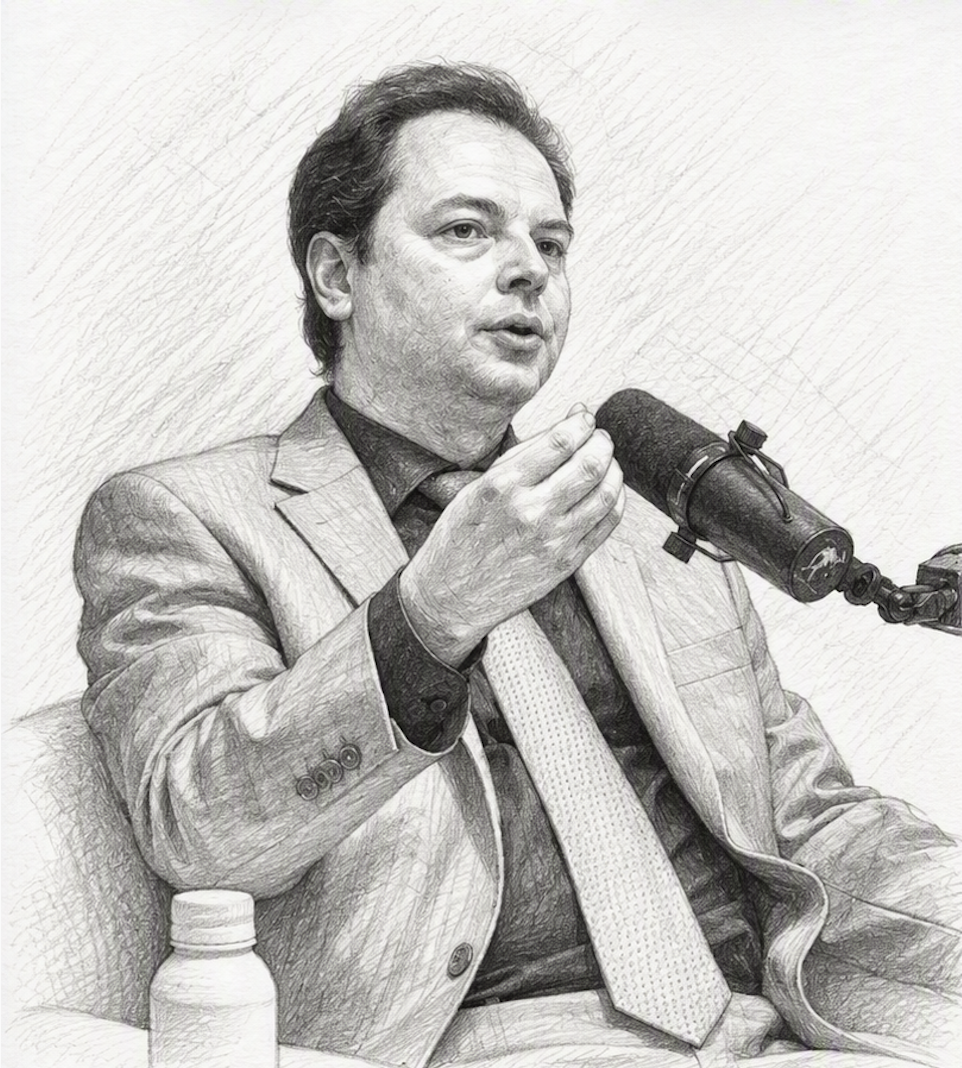
Jason Jorjani is a super smart guy and that shows in the language he uses and length of the sentences making it sometimes a bit hard to follow. But with persistence I was able to plow through this very interesting book. He starts of by pitching two famous perspectives on survival studies. On one side, Jeffrey Mishlove (from the New Thinking Allowed Podcast, go check it out on YouTube) gathers a whole quiver of evidence, like near-death experiences and mediumship, to argue that our minds belong to a single universal consciousness. On the other side, philosopher Stephen Braude uses a sharp scalpel to argue that living people might just be using super-psychic powers to fake afterlife evidence.
Jorjani rejects both the idea of dissolving into one big cosmic mind and the idea that all psychic activity is just an unconscious trick. Instead, he suggests a field of individual wills where your unique soul gets to fight for its own survival.
Different types of evidence
Jorjani digs into Helen Wambach’s statistical hypnosis studies. She regressed over a thousand people who accurately recalled quirky, verifiable historical details without any leading questions. Subjects spontaneously described everything from ancient Roman legionary armor to medieval Irish herbal remedies and West African slave abduction routes.
Next up is Ian Stevenson’s legendary psychiatric fieldwork on children who spontaneously remembered past lives. These kids provided verified names, places, and police reports from distant towns before even starting school. Even wilder, Stevenson documented physical birthmarks on children that matched the exact autopsy diagrams of death wounds from the deceased person.
To top off the early evidence, Stevenson tracked cases across Europe and studied responsive xenoglossy. This happens when someone under hypnosis, like an American woman named T.E., suddenly speaks fluent, conversational German that she never learned in her life.
As the evidence gets stranger, the book tackles cases that look less like normal reincarnation and more like full-blown possession. Adults like Sumitra and Veena collapsed into death-like states, only to wake up as entirely new personalities named Shiva and Ramoo who knew intimate secrets of recently deceased people. Stephen Braude argues that these cases overlap with dissociative identity disorder, where multiple minds might inhabit a single body.
The narrative then flips this concept on its head by looking at the Psychic Twins, Terry and Linda Jamison. They experienced mirrored lives, shared physical pain, and identical spontaneous artwork, suggesting one soul split into two physical bodies. Guy Lyon Playfair’s research on twin telepathy backs up the idea that consciousness can divide across multiple vessels.
The dark side
Then things take a really dark turn in the afterlife realm. Pioneer Robert Monroe discovered out-of-body travel and realized Earth might actually be a loosh farm. In his accounts, a cosmic experimenter cultivates human suffering and emotional turmoil as a valuable energy source called loosh.
Researcher P.M.H. Atwater adds fuel to the fire by documenting terrifying hellish near-death experiences and empty voids. She warns that the welcoming light and deceased relatives might just be programmable illusions staged to trick us. This matches abductee Betty Andreasson’s encounter, where Nordic elders controlled grey androids to run staged religious dramas using a great door of light.
The most horrific incident comes from Paul Garratt, who flatlined and plunged onto a blue sand beach. He watched flying UFOs use green light beams to violently rip soul-orbs out of agonizing naked bodies before marching them into a black hole. Meanwhile, Brett Stuart’s remote viewing team reported an energetic grid around Earth powered by a rotating axle inside the hollow Moon to catch and recycle souls.
Durga Jatav experienced a Kafkaesque clerical error in the netherworld. Demons severed his legs to keep him from escaping, only to realize they picked up the wrong guy. They had him pick his original legs out of a warehouse repository, reattached them, and sent him back to life with real physical scars on his knees.
We are software
Jorjani reframes the soul as executable software running in a quantum computational simulation. Drawing on Claude Shannon, Rolf Landauer, John Wheeler, and Melvin Vopson, information is shown to be physical and carry mass. This means reality works like an optimized video game engine where quantum wave collapse saves processing power by rendering only what an observer looks at.
Under this code-based model, reincarnation is simply downloading a personality save file into a new avatar, while poltergeists are live software loops and ghosts are lingering code executing at a specific address. Even the Mandela Effect makes sense as version control glitches, branch merges, or save-state rollbacks in the master database.
The clues deepen when regression hypnotists Brian Weiss and Bruce Goldberg lead subjects into future life progressions. Patients consistently describe dystopian future worlds filled with underground shelters, corporate assemble-units, and ruined landscapes. Remote viewer Joseph McMoneagle independently confirmed these exact same future timelines, showing that the system constantly calculates and previews probabilistic branches.
Philosophical & Cultural Frameworks
When unpacking historical frameworks, the book starts with the ancient Greeks. Orphic tablets warned dead souls to avoid the river of forgetfulness, Pythagoras mathematized soul migration, and Plato introduced the myth of Er where souls choose their next lives before drinking from Lethe. Plotinus later systematized this into an ascent toward the One, though his extreme hatred of physical matter missed the beauty of higher-level virtual realities.
Looking at scripture, the Biblical narrative evolves from the silent underworld of Sheol to resurrection prophecies and Paul’s spiritual body. Gnostics countered this by framing the material world as an archontic prison built by a foolish Demiurge. In contrast, the Quran preaches a rigid barrier called barzakh, a one-time resurrection, and an eternal choice between silk-draped gardens or roasting skins in hell.
Modern Hindu thinker Richard Thompson compares the world to virtual reality in his book MAYA, but Jorjani notes that his theory gets stuck in old dualistic thinking. Buddhism offers a much cleaner framework. The Pāli Canon denies an unchangeable soul, explaining reincarnation through dependent origination and intention, while the Tibetan Bardo Thödol maps out peaceful and wrathful visions as internal mind projections during the post-death state.
How not to forget after you die and reincarnate again
Jorjani gives a practical, hands-on toolkit for achieving postmortem sovereignty rather than acting like passive livestock. Robert Monroe provides out-of-body training techniques using audio brainwave entrainment to master energy focus levels and navigation protocols. Neuroscientist Andrew Gallimore shows how DMT and brain dynamics shift consciousness across different basins in the World Space.
Mystic G.I. Gurdjieff warns that unawakened humans are literally food for the Moon, which harvests our vital energy unless we forge a higher astral body through conscious labor. Meanwhile, T. Galen Hieronymus built symbolic radionics machines out of cardboard and ink that prove form and symbol can directly manipulate energy.
Finally, Vladimir Raikov’s Russian experiments in artificial reincarnation demonstrate that active trance can mount talent templates like an operating system upgrade. The ultimate takeaway is a call for a Promethean revolt. By mastering these psychotronic tools, we can refuse the tunnel of light, break out of the archontic recycling system, and become sovereign authors of our own eternal destinies.
Jorjani’s view on Consciousness
In Jorjani’s view, consciousness is definitely not a mere chemical byproduct of the brain, nor is it a passive drop in a single monistic ocean. Instead, consciousness is an active, fundamental informational process running on the server side of a quantum computational universe.
He embraces a Jamesian pluralism where individual minds exist as sovereign, creative agents in a cosmic battlefield of wills. Your individual self is a composite software architecture capable of persistence, division, and reinstallation across different avatars and dimensions.
Rather than seeking to dissolve into a cosmic mind or escape existence entirely, consciousness is called to achieve self-authorship. By cultivating lucidity and mastering psychotronic tools, consciousness can actively shape its own reality and navigate the multiverse with complete freedom.
End List of Key Persons, Books, Historical Events, and Major Concepts
- Jeffrey Mishlove (Beyond the Brain): Mentioned to showcase a defense of survival grounded in monistic idealism, which the author critiques for dissolving individual personality.
- Stephen Braude (Immortal Remains): Referenced for applying analytical philosophy to survival data and demonstrating that the super-Psi hypothesis is practically unfalsifiable.
- Helen Wambach (Reliving Past Lives): Cited for her statistical regression hypnosis studies that gathered historically accurate details from over a thousand subjects.
- Ian Stevenson (Twenty Cases Suggestive of Reincarnation): Included for his forensic psychiatric documentation of children who remembered past lives, complete with matching birthmarks.
- Sumitra/Shiva & Veena/Ramoo Cases: Mentioned as key adult cases where sudden personality replacement resembles possession more than standard childhood reincarnation.
- Terry and Linda Jamison (Separated at Earth): Referenced alongside Guy Lyon Playfair’s twin research as evidence that a single soul can reincarnate simultaneously into two bodies.
- Robert Monroe (Journeys Out of the Body & Far Journeys): Cited for mapping out-of-body travel, Hemi-Sync technology, and exposing the concept of Earth as a loosh harvesting farm.
- P.M.H. Atwater (Beyond the Light): Mentioned for documenting distressing hellish near-death experiences and warning that afterlife light encounters can be deceptive.
- Betty Andreasson Luca (The Andreasson Affair): Referenced to demonstrate how close encounters feature Nordic elders controlling grey androids to stage religious afterlife dramas.
- Paul Garratt’s Near-Death Experience: Included as a terrifying account of a blue sand beach where UFOs violently extracted soul-orbs from writhing bodies.
- Brett Stuart’s Remote Viewing Team: Cited for discovering an energetic grid around Earth and a soul-recycling machine housed inside the hollow Moon.
- Durga Jatav: Mentioned to illustrate a Kafkaesque bureaucratic error in the netherworld where demons severed his legs before returning him to life with new physical scars.
- Claude Shannon, Rolf Landauer, John Wheeler, and Melvin Vopson: Cited as foundational information physicists whose work proves that information is physical, carries mass, and forms the cosmic substrate.
- Brian Weiss (Same Soul, Many Bodies) & Bruce Goldberg (Past Lives, Future Lives): Referenced for using future life progression hypnosis to reveal probabilistic visions of a devastated future world.
- The Myth of Er (Plato’s Republic): Mentioned as a foundational Greek text describing postmortem judgment, the spindle of Necessity, and souls choosing their next lives before drinking from Lethe.
- Richard Thompson (MAYA: The World as Virtual Reality): Cited for attempting a modern Hindu synthesis of survival evidence using virtual reality metaphors, though criticized for retaining Samkhya dualism.
- The Pāli Canon & Tibetan Bardo Thödol: Referenced to contrast Theravada Buddhism’s anattā concept with the Tibetan mapping of post-death visionary bardos.
- Andrew Gallimore (Reality Switch Technologies): Cited for proposing the World Space model and explaining how DMT allows consciousness to switch between neural attractor basins.
- G.I. Gurdjieff (Beelzebub’s Tales) & P.D. Ouspensky: Mentioned for their esoteric cosmology asserting that human emotional energy serves as food for the Moon.
- T. Galen Hieronymus & Symbolic Machines: Cited for building radionics devices that work using cardboard schematics, proving that symbolic forms carry operative power.
- Vladimir Raikov’s Artificial Reincarnation: Referenced for using active hypnosis to install identity templates in a state of super-wakefulness, serving as a model for bardo sovereignty.
- The Software Soul & Simulation Hypothesis: Major concept framing the soul as executable code in a quantum computational universe, making reincarnation a file reinstallation.
- Loosh Farming & The Archontic Control System: Major concept describing how parasitic entities harvest human emotional discharge and manage a hyperdimensional soul-recycling prison.
- Promethean Revolt & Thanotic Sovereignty: Major concept advocating for mental discipline and psychotronic training so individuals can refuse deceptive afterlife traps and author their own destiny.