
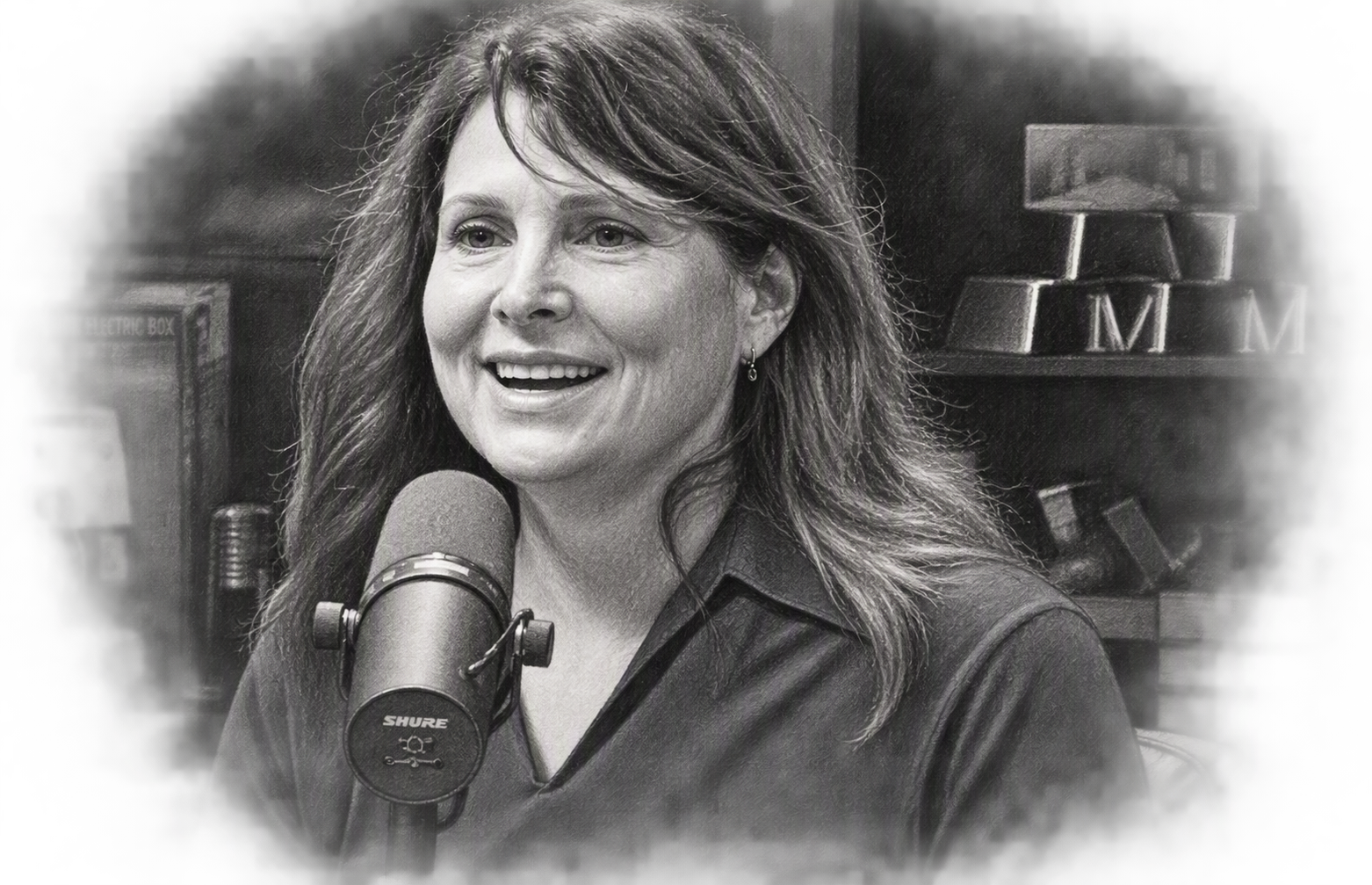
Diana Walsh Pasulka began her academic career by studying alongside Catholic priests and nuns in formation before earning a doctorate in religious studies. Unlike theologians who advocate for specific doctrines, Pasulka operates strictly as an academic researcher who analyzes how technology, culture, and belief systems interact. Her entry into extraordinary phenomena occurred by accident while examining historical archives. She published early work on nineteenth century children who reported near-death visions of deceased friends and relatives. This research eventually led her to co-chair the death session for the American Academy of Religion for ten years.
During this phase of her research, Pasulka examined how humans across time have documented afterlife journeys. In his foundational text The Republic, the ancient philosopher Plato recorded the story of the soldier Er, who returned to life on a battlefield to describe the soul’s journey. Pasulka noted that these accounts share striking cross-cultural patterns, such as life reviews that mirror ancient Egyptian rituals where the deity Osiris weighed human souls against a feather. She also explored Divine Comedy by Dante Alighieri, noting how Dante constructed a narrative where the Roman poet Virgil and his beloved Beatrice guided his soul through Hell, Purgatory, and Heaven. Pasulka’s first book investigated the Catholic dogma of Purgatory, tracing how historical descriptions of afterlife purification shifted following the reformative Vatican II council in the 1960s.
The Vatican Archives and Historical Levitations
Pasulka’s research took a major turn when she gained access to the Vatican Secret Archives, the private 53-mile archival vault under the authority of the Pope. Her entry was arranged after she picked up Brother Guy Consolmagno, director of the Vatican Observatory, from an airport and discussed her academic work on extraordinary phenomena over tea. Inside the archives, guarded by armed security officers, Pasulka examined rare manuscripts and sworn legal testimonies recorded during the Spanish Inquisition.
Her archival research focused on historical accounts of levitation and bilocation. She translated trial records for Saint Joseph of Cupertino, a seventeenth century priest documented by thousands of sworn witnesses for levitating into the air during prayer. Pasulka highlighted that witnesses who touched Joseph were lifted into the air with him, a phenomenon described by science fiction author Arthur C. Clarke as a private micro-gravity field. She also studied Saint Maria of Agreda, a seventeenth century Spanish nun who recorded traveling on the wings of angels to teach indigenous tribes in the American Southwest while remaining inside her cell in Spain. Yale historian Carlos Eire later analyzed these historical worldviews in his book They Flew. During her research on physical events, Pasulka also examined modern Marian apparitions in Garabandal, Spain, and Fatima, Portugal, where tens of thousands witnessed solar anomalies and aerial discs in 1917.
Government Approach, Surveillance, and the Pressures of Disclosure
As Pasulka presented her comparative research linking historical religious visions to modern aerial phenomena at academic conferences, government intelligence officers and aerospace officials began monitoring her work. Officials tasked with tracking online academic research reached out directly to her university email account, requesting access to her unpublished data and historical sources.
Around 2013, Pasulka was introduced to a high-level government space and defense insider known by the pseudonym “Tyler” (later identified as Tim Taylor). Pasulka invited religious studies scholar Jeffrey Kripal to join her for an initial lunch with Tyler in Atlanta to evaluate his credibility. During the meeting, Tyler revealed that he was wearing concealed surveillance and recording equipment. As Pasulka prepared her manuscript for American Cosmic, intelligence personnel continuously contacted her for three to four weeks, attempting to uncover the real identities of the scientists featured in her research. Legendary UFO researcher Jacques Vallée, author of Messengers of Deception, regularly advised Pasulka to remain cautious regarding government leaks and physical evidence, warning her that intelligence networks frequently manipulate public narratives.
The Blindfolded Desert Expedition
Driven by a desire to show Pasulka physical evidence of non-human contact, Tyler invited her on an expedition to an alleged 1940s crash retrieval site in the New Mexico high desert. Pasulka agreed to go only if accompanied by Stanford University scientist Gary Nolan (who initially used the pseudonym James). After landing in New Mexico, Pasulka and Nolan put on blindfolds inside a vehicle and were driven for 45 minutes across rocky terrain. Equipped with rattlesnake boots, sunscreen, and specialized metal detectors, the team searched the desert floor.
Pasulka observed that the site matched locations used in television productions like The X-Files, illustrating how physical sites become reinforced through popular media. On the ground, the team retrieved unusual, iridescent metallic fragments with a rough texture resembling frog skin. Tyler explained that surrounding rusty debris consisted of disintegrated cans placed by the government in the 1950s, a detail that Pasulka insisted on retaining in her book despite skepticism from her editor at Oxford University Press. When the team returned to the airport in Albuquerque, Tyler predicted that Nolan’s backpack containing the metal fragments would trigger specialized airport security alarms. The prediction came true when security officers detained a shaken Nolan for questioning while Tyler bypassed standard screening entirely. Subsequent laboratory analysis of the metal revealed unusual isotopic ratios.
Technology, Social Media, and the Emerging UFO Religion
In her recent New York Times bestseller The Others and her book Encounters, Pasulka warns that a new digital belief system is coalescing around UFO culture and artificial intelligence. She outlines how nineteenth century thinkers like Nikolai Fedorov, founder of Russian Cosmism, sought to merge Christian theology with rocket science to physically resurrect the dead and colonize outer space. Later, Jesuit paleontologist Pierre Teilhard de Chardin conceptualized the Noosphere, a global layer of unified human thought evolving above the biosphere that anticipated the modern internet and AI networks. Media theorist Marshall McLuhan similarly argued that electronic communication technologies alter human perception and cognitive capacity.
Pasulka critiques how science fiction writers like Arthur C. Clarke portrayed extraterrestrial contact. In Clarke’s novel Childhood’s End, demonic-appearing overlords eliminate traditional human religions and absorb human children into a collective overmind, a narrative structure that dismisses the innate human spiritual sense. Drawing on Plato’s dialogue Phaedrus, where Socrates warned that written text would destroy human memory retrieval (anamnesis), Pasulka argues that modern AI and social media externalize human cognition and erode internal reflection.
Referencing philosopher René Girard and his mimetic theory, Pasulka explains how digital platforms exploit copied human desires and automate societal scapegoating. In response to tech investor Peter Thiel discussing the Antichrist, Pasulka suggests that AI-powered social media is a prime contender for the false prophet because it physically alters brain chemistry and eradicates human spiritual awareness. Ultimately, Pasulka urges individuals to cultivate their internal awareness, limit digital consumption, and critically evaluate both government disclosure campaigns and modern technological mythologies.
Interesting books that were mentioned
The Republic by Plato
In The Republic, Plato records one of the earliest documented near-death experiences in Western literature, telling the story of a soldier who dies on the battlefield, unexpectedly returns to life, and describes what he witnessed while dead. While Diana Walsh Pasulka originally studied this dialogue in school as a dry political treatise, re-reading it after years of UFO archival research completely transformed her perspective. She realized that Plato was articulating early frameworks for simulation theory, non-human entities, and the hidden mechanics of human perception.
Phaedrus by Plato
In Phaedrus, Plato depicts a dialogue between Socrates and a young Athenian named Phaedrus, who is enthusiastic about writing, the cutting-edge communication technology of his era. Socrates challenges this excitement by warning that relying on written text externalizes human memory and degrades our capacity for anamnesis, or internal knowledge retrieval. Pasulka connects this ancient warning directly to modern artificial intelligence and social media, arguing that Socrates would be horrified by AI because surrendering human thought to digital platforms systematically strips away our internal reflection and spiritual awareness
Lord of the World by Robert Hugh Benson
Discussed for its early 20th-century narrative predicting a technological grid that systematically eliminates human spiritual knowledge.
Consciousness
In the discussion with Diana Pasulka, consciousness is examined through several historical, technological, and spiritual lenses:
1. Technology, AI, and the Erosion of Internal Consciousness
Pasulka highlights that AI-powered algorithms and social media bypass human critical faculties, going directly into the brain and altering how people perceive reality.
Every human is born with an innate capacity for an internal “spiritual sense” or interior life. Constant digital engagement externalizes human thought and strips away this internal cognitive reflection, altering brain chemistry and eroding human spiritual awareness.
Referencing media theorist Marshall McLuhan, she notes that communication technologies fundamentally reshape human perception, consciousness, and social structures.
2. The Noosphere and the “Global Brain”
Pierre Teilhard de Chardin’s Vision: Pasulka discusses Jesuit paleontologist Teilhard de Chardin, who conceptualized the Noosphere—a sphere of unified human thought evolving above the biosphere. Teilhard envisioned humanity’s cognition (“cerebration”) connecting into a mass “global brain” or networked mind evolving toward what he called the Omega Point. Pasulka notes that this concept directly prefigured the internet and artificial intelligence networks.
3. Socratic Anamnesis and Externalized Memory
- Plato’s Phaedrus: Socrates warned that relying on written text externalizes human memory and destroys anamnesis—the internal capacity to retrieve knowledge using the mind and body directly. Pasulka applies this to modern AI, arguing that surrendering internal memory retrieval to technology alters human consciousness and degrades cognitive self-reliance.
4. Altered States and Visionary Perception
- Ecstatic Trance States: In her research on historical Close Encounters and Marian apparitions (such as Garabandal, Fatima, and Juan Diego), Pasulka explains that visionaries enter ecstatic trance states or enchanted conditions. During these events, their perception shifts, and their vision focuses on realities or phenomena that surrounding onlookers cannot immediately perceive.
5. Time and Future Knowledge Entering Consciousness
- Eric Wargo’s Block Universe: Discussing author Eric Wargo, Pasulka notes that in a static “block universe” where time is non-linear, information, pre-memories, and creative ideas from future events can leak into human consciousness through dreams, hypnagogic states, and artistic expression.
In The Others, Diana Pasulka synthesizes her research on historical visionaries, technology, and human perception to issue a direct warning: modern digital technology and AI are actively dismantling human consciousness and erasing our innate spiritual sense.
Her warning centers on several key arguments:
1. The Physical Eradication of the “Spiritual Sense”
Pasulka asserts that every human being is born with an internal “spiritual sense”—a physical and cognitive capacity for interior reflection, contemplation, and transcendent awareness. Historically, traditional religions built practices like prayer, fasting, and meditation specifically to cultivate and safeguard this internal sense.
However, modern AI-driven social media algorithms bypass our critical faculties, going directly into the brain and altering its chemistry. By constantly bombarding us with external stimuli and short dopamine loops, digital architecture systematically deprives people—especially younger generations—of the quiet necessary to develop an interior life. Pasulka argues that if there is a modern contender for the Antichrist (or the false prophet described in Revelation), it is AI-powered social media, precisely because it physically destroys the human capacity for spiritual awareness.
2. Socratic Anamnesis and Cognitive Atrophy
Drawing on Plato’s Phaedrus, Pasulka highlights Socrates’ warning that new technologies externalize human memory and destroy anamnesis (the internal retrieval of knowledge). By surrendering our memory, critical thinking, and reflection to smartphones and artificial intelligence, humanity is outsourcing its own consciousness. Thinking and critical reasoning are no longer enough to resist propaganda because technology now performs those faculties for us.
3. Science Fiction and the Replacement of Faith
In The Others, Pasulka critiques how popular science fiction—such as Arthur C. Clarke’s Childhood’s End—has historically treated human consciousness. In Clarke’s novel, alien overlords usher in a collective mind that absorbs human children, while explicitly framing the human spiritual sense as disgusting or archaic. She notes that modern media and digital narratives actively discredit traditional religious frameworks, replacing them with a new, technologically driven “UFO religion” that offers technological spectacles instead of genuine internal transformation.
4. The Noosphere: Global Consciousness vs. Digital Hivemind
Pasulka contrasts this digital trap with Jesuit paleontologist Pierre Teilhard de Chardin’s concept of the Noosphere—a global layer of unified human thought. While Teilhard envisioned this global brain as an evolutionary step toward higher spiritual awareness (the Omega Point), Pasulka warns that without individual spiritual agency, our connected digital networks risk becoming an apocalyptic, hivemind-like trap where human individuality is lost.
Her Proposed Prescription
To preserve human consciousness against digital manipulation, Pasulka advocates for intentional resistance:
- Cultivating silence and interiority: Reclaiming phone-free physical spaces (such as the chess club she helped establish at her university) where people can engage face-to-face without digital mediation.
- Practicing cognitive “fasting”: Waiting out generated desires rather than instantly reacting to algorithmic prompts.
- Guarding the mind: Focusing on personal ethical reflection rather than summoning or chasing external extraordinary phenomena.